Load a dumpster by placing heavy items first through the rear door, filling voids with small flat debris, keeping the load level with the top rail, putting sharp or nail-bearing items in the middle, and keeping lightweight materials buried under heavier debris so nothing escapes under the tarp.
Loading Guide · Grand Rapids & West MichiganLoading a dumpster correctly makes your project safer, cheaper, and more efficient. A few simple habits let you fit more in the bin, avoid damage fees, and keep the road safe when the truck picks up. Here’s how to do it right.

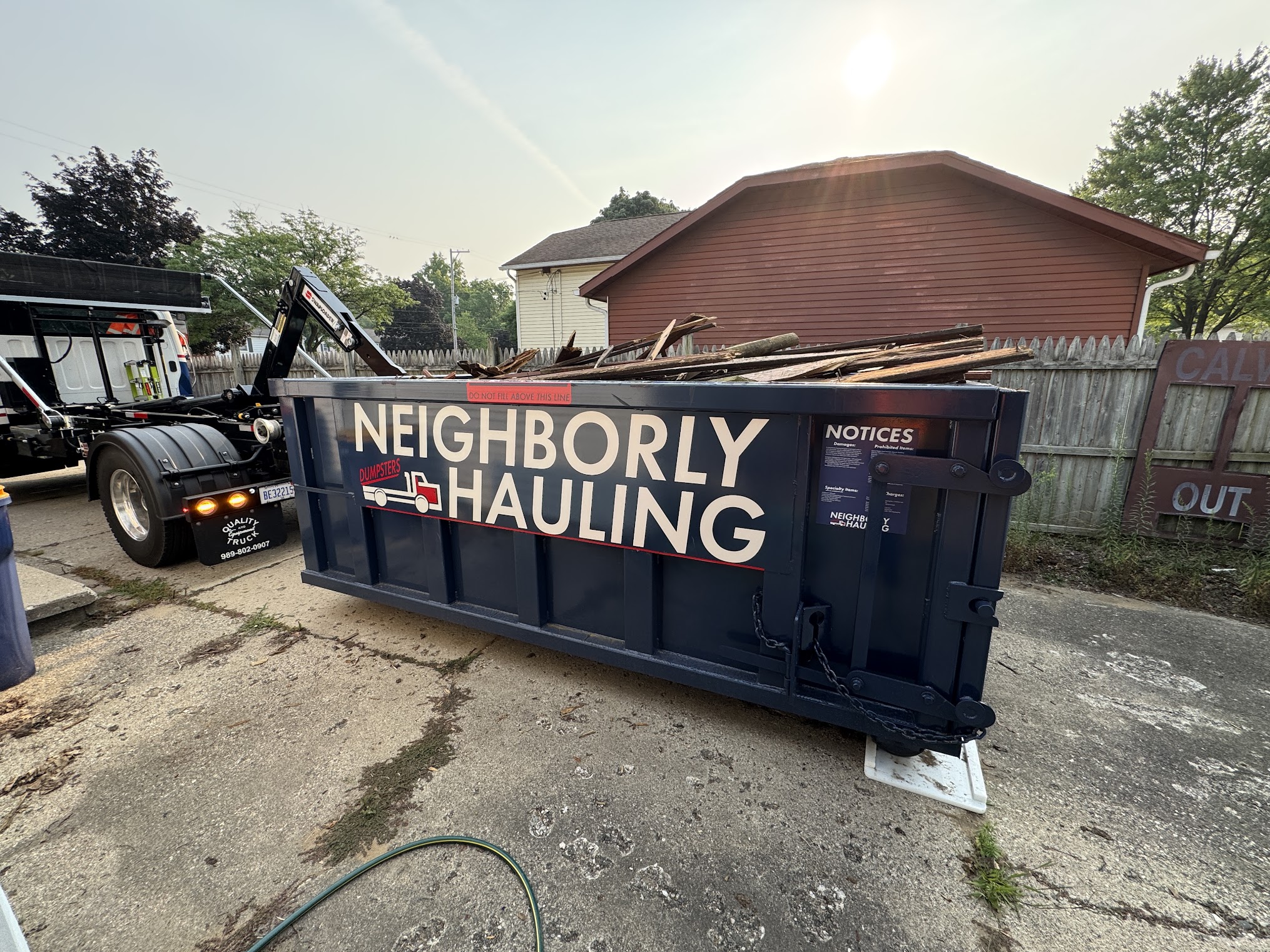
A properly loaded dumpster: heavy debris on the bottom, small fill on top, load level with the top rail.
The 5 rules of safe dumpster loading — at a glance
Keep the load level — no piling higher on one side
Heavy items first — walk them in through the rear door
Small stuff last — fill gaps, maximize every cubic yard
No fly-away material on top — bury lightweight debris
Nails mid-layer, facing down — protect the tarp
Slide, don’t drop — use the top rail as a guide, not a landing pad
Step-by-Step Loading Guide
Keep your load level — it’s safer and holds more

A level load is the single most important rule. Debris stacked too high on one end can shift during transport — creating a serious road safety hazard and potential for load spills.
Do
- Spread debris evenly front to back
- Keep the top surface flat as you go
- Stop when material reaches the top rail
Don’t
- Pile debris only in one end
- Load above the top rail
- Assume the driver can rebalance it
Michigan law requires all dumpster loads to be tarped for transport. An uneven load can prevent the tarp from seating properly — and an unsecured load is a ticketable offense for the driver.
Heavy items first — walk them in through the rear door
Open the rear door and walk in the heavy, dense items first. This creates a stable base layer that keeps the load balanced and makes the rest of the fill much easier.
Load first through the rear door
- Furniture and large appliances (declared)
- Bags of shingles and roofing material
- Concrete and masonry chunks
- Deck posts, railroad ties, heavy lumber
- Cabinets, countertops, large fixtures
Body mechanics matter. Walking heavy items in through the rear door instead of hoisting them over the side rail protects your back — and is the only practical option for the 21 and 25 yard bins.
Small and flat items last — fill every gap

Once the heavy foundation is in place, finish the load with smaller pieces that naturally settle into voids. This is how you get the most out of every cubic yard.
Best gap-fillers
- Drywall scraps and trim offcuts
- Flattened cardboard (press it flat)
- Broken tile and ceramic
- Loose trash bags and packaging
- Small branches and yard debris
This is the secret to a fuller bin. The difference between a dumpster that “feels full” and one that actually is full is usually just the absence of gap-filling. A well-packed 12 yard holds significantly more than a loosely thrown one.
No fly-away material on top — bury lightweight debris
Michigan law requires all loads to be tarped before transport — but even a properly secured tarp can’t stop some lightweight materials from catching wind or slipping out at highway speeds.
Never place on top
- Loose cardboard sheets
- Plastic sheeting or bags
- Foam board and insulation
- Plywood offcuts
- House wrap and vapor barrier
Instead
- Place lightweight items mid-load
- Lay heavy debris on top to pin them
- Roll or fold large plastic sheets tightly
- Cut foam board into smaller pieces
Road safety, not just rules. Debris escaping a dumpster at highway speeds is a serious hazard. Flyaway materials can damage vehicles and create liability for the renter.
Nails and sharp points belong mid-layer, facing down
Items with exposed nails, screws, or sharp edges — deck boards, fencing, framing lumber — can puncture the tarp during transport if placed on top. A damaged tarp has to be replaced, and that results in a charge to the renter.
Best practice
- Place nail-bearing items in the middle of the load
- Turn nail sides face-down when possible
- Lay a layer of cardboard or loose debris over them
- Stack additional material on top to pin them down
Avoid
- Deck boards nails-up on the top layer
- Old fencing with exposed wire on top
- Roofing nails pointing upward at the surface
Bonus: Use the Top Rail as a Slide, Not a Drop Point
The reinforced top rail on every Neighborly Hauling bin is designed so you can slide items in from the side — especially useful for long pieces of lumber, doors, or flat material. Rest the item on the rail, angle it down, and slide it in.
Common Questions
How full can you fill a dumpster?
Debris should be level with or below the top rail — not above it. If material sticks above the rim on any side, the load can’t be safely tarped for transport under Michigan law, and the driver may not be able to pick it up without first requesting a rebalance. When in doubt, leave an inch or two of clearance below the rail.
Do I need to break down large items before putting them in a dumpster?
Not always — but it helps. Whole doors, full sheets of drywall, and intact furniture take up more volume than they need to. Breaking them down or stacking them flat significantly increases how much total debris fits. Whole items also create air pockets that prevent gap-filling, so you end up with a half-full bin that looks full.
Can I put cardboard in a dumpster?
Yes, but flatten it first and load it mid-layer rather than on top. Loose cardboard sheets on top can catch wind under the tarp at highway speeds. Flattened and stacked cardboard is one of the best gap-fillers in the bin.
What happens if I overfill the dumpster?
If debris extends above the top rail, the driver may not be able to tarp the load legally — which means pickup may be delayed until the load is reduced. In some cases a debris overage fee may apply. The fix is always to call ahead for a swap if you’re running out of room, rather than trying to cram more in at the end.
Should I use the rear door or toss items over the side?
Use whichever is easier for the item. For the 12 and 17 yard bins — both 58–59 inches tall — tossing lighter items over the side is easy for most adults. For heavy or bulky items on any size bin, and for virtually everything going into the 21 or 25 yard bins, the rear door is safer and less physically demanding.
The Neighborly Difference
Clean, True-Size Bins
Swept and washed regularly. Square-wall construction so every stated cubic yard is usable — no dead corners.
Driveway Protection Included
HDPE Rolliskate™ boards under every bin at no extra charge — surfaces protected regardless of driveway material.
Transparent Fees
Every potential charge — overage, damage, mattresses — listed publicly before you book. No surprises at pickup.
Local, Licensed & Insured
Family-owned and operating in Grand Rapids. All debris routed through Kent County’s transfer station and waste-to-energy facility.
Loading a dumpster correctly takes almost no extra time — but it makes your rental go farther, keeps fees away, and keeps roads safe for everyone. Heavy debris first, level load, small fill on top, nothing sharp or lightweight at the surface. Those four habits are the whole game.