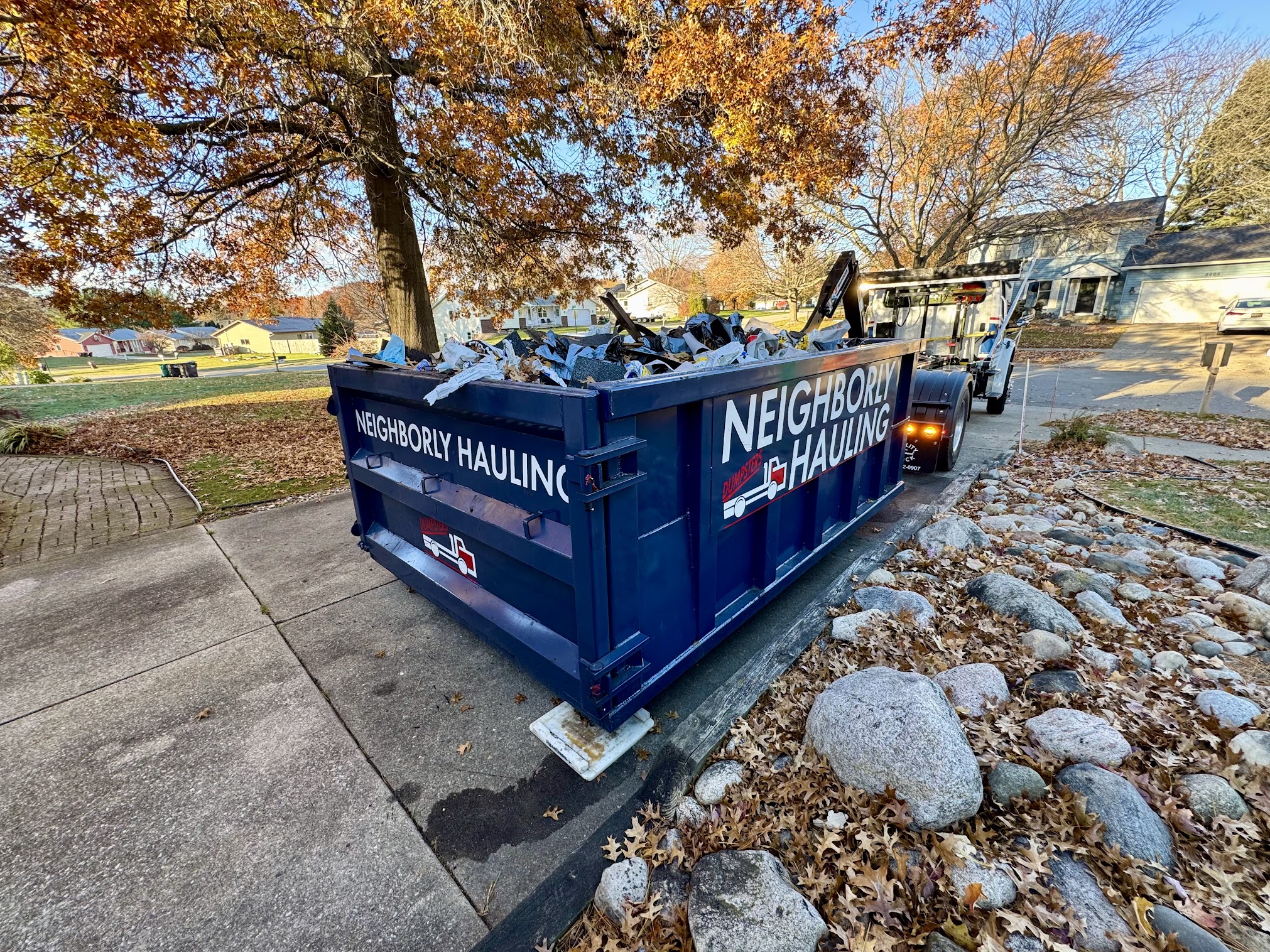
The “Max Load Level” sticker marks the top rail of the dumpster — the highest point debris can reach. Nothing can extend above the top rail. Overfilled bins cannot be safely tarped for transport under Michigan law, and the driver cannot legally pick up a load that exceeds this line.
Safety Guide · Grand Rapids & West MichiganEvery Neighborly Hauling dumpster has a bright MAX LOAD LEVEL sticker along the top rail. It’s easy to spot — but what does it actually mean? How strict is it? And what happens if the bin is overfilled? Here’s the full picture.
What the Sticker Actually Means
Left: debris level with the top rail — correct, safe to transport. Right: debris above the rail — cannot be tarped or legally transported.
The Max Load Level sticker marks the highest point debris can reach. Not the highest point it’s comfortable to load. The highest point it can legally and safely sit for road transport — nothing can extend above the top rail.
Safety
Overfilled bins are more likely to spill debris onto the road — a hazard to other drivers and the hauler.
Legal Compliance
Michigan law requires loads to be contained and secured. An untarped or overflowing load is a ticketable offense.
Transport Stability
Debris above the rail shifts weight unevenly and prevents the tarp from seating properly, making the load unsafe at highway speeds.
Can I Go Slightly Above the Line?
No. Even an inch or two above the rail creates real problems at highway speeds.
What “slightly above” does to a tarp
- Interferes with the tarp arms and frame
- Prevents the tarp from laying flat and sealing
- Can puncture or tear the tarp fabric
- Creates wind uplift at highway speeds
- Allows material to slip out from under the tarp edge
“Slightly above” quickly becomes unsafe at 65 mph. A tarp damaged by overloading must be replaced — and that cost passes to the renter.
Why Overloading Is More Dangerous Than It Looks
Picture driving behind a dumpster with a piece of plywood angled above the rail. Even tarped, that sheet can vibrate loose or slip under the tarp edge at speed. Now picture it being plastic siding, metal flashing, foam insulation, or cardboard — lightweight materials that don’t fall, they fly.
⚠️ What overloaded dumpsters cause on the road
Debris escaping a dumpster at highway speeds causes cracked windshields, traffic hazards, and driver liability. Wind creates enormous uplift force at 65+ mph — materials that seem secure at rest become projectiles in motion. This is why Neighborly Hauling physically cannot pick up an overfilled bin — the risk to the driver and other road users is too great.
This applies to lightweight materials too — not just heavy debris. A cardboard sheet above the rail is more dangerous than a concrete chunk below it, because the cardboard will actually move.

Lightweight items that must stay below the rail
- Loose cardboard sheets
- Plastic sheeting and bags
- Foam board and insulation
- Plywood and OSB offcuts
- Trim boards and light lumber
- House wrap and vapor barrier
If any of these are above the max fill line — they must be repositioned under heavier debris or removed before pickup.
What Happens If the Bin Is Overfilled
Pickup delayed or refused
The driver cannot legally lift an untarped load. If the bin is overfilled, pickup cannot proceed until the load is reduced to below the rail.
Return trip fee may apply
If pickup cannot be completed and a second trip is required, a return trip fee may be charged for the additional drive time and scheduling.
You may need a second bin
If the volume truly exceeds the bin’s capacity, the right solution is a swap or a second rental — not forcing more in over the rail.
Tarp damage fee
If debris above the rail punctures or tears the tarp during attempted pickup, tarp replacement costs pass to the renter.
Common Questions
What does “Max Load Level” mean on a dumpster?
The Max Load Level sticker marks the top rail of the dumpster — the highest point debris is permitted to reach for road transport. Nothing can extend above this line. Michigan law requires all dumpster loads to be tarped and contained during transport, and a tarp cannot properly cover a load that extends above the rail.
Can I stack debris slightly above the top rail of the dumpster?
No. Even a small amount of material above the top rail prevents the tarp from seating properly, risks damaging the tarp arms, and creates a road hazard at highway speeds. The max load line is a hard limit, not an estimate. If the load exceeds it, the driver cannot safely complete the pickup.
What if my dumpster fills up before I’m done with the project?
Call Neighborly Hauling to schedule a swap — we’ll pick up the full bin and drop a fresh one. A timely swap call is always less expensive than a return trip fee or a tarp damage charge from trying to overload the bin. If you think you might run out of room, sizing up at booking is the most cost-effective move.
Why can’t the driver just pick up an overfilled dumpster?
Michigan law requires dumpster loads to be tarped and secured during road transport. A load extending above the top rail cannot be tarped effectively, making it illegal to haul. Beyond the legal issue, debris escaping a dumpster at highway speeds creates a serious safety hazard — cracked windshields, road hazards, and potential liability for both the driver and the renter.
How do I avoid overfilling my dumpster?
Load heavy items first through the rear door, break down large items before tossing them in, and use small flat debris to fill voids rather than piling more on top. Keep the load level — don’t pile higher on one end. Stop when material reaches the top rail. Full details: How to Load a Dumpster Safely and Efficiently →
The Neighborly Difference
Safety-First Hauling
Every load tarped before transport. We will not pick up an unsafe load — it protects the road and your liability.
True-Capacity Bins
Square-wall design means every cubic yard is usable. A properly loaded bin genuinely holds what it says — fewer overfill surprises.
Transparent Fee Policy
Return trip fees, tarp damage, overage weight — every potential charge published before you book. No hidden surprises.
Local, Licensed & Insured
Fully compliant with Kent County regulations. Every load disposed through approved county facilities.
The Max Load Level sticker isn’t bureaucracy — it’s the line between a safe pickup and a road hazard. Keep debris below the top rail, load level, and call for a swap if you need more room. Those three habits keep your project on track, the road safe, and unnecessary fees off your bill.